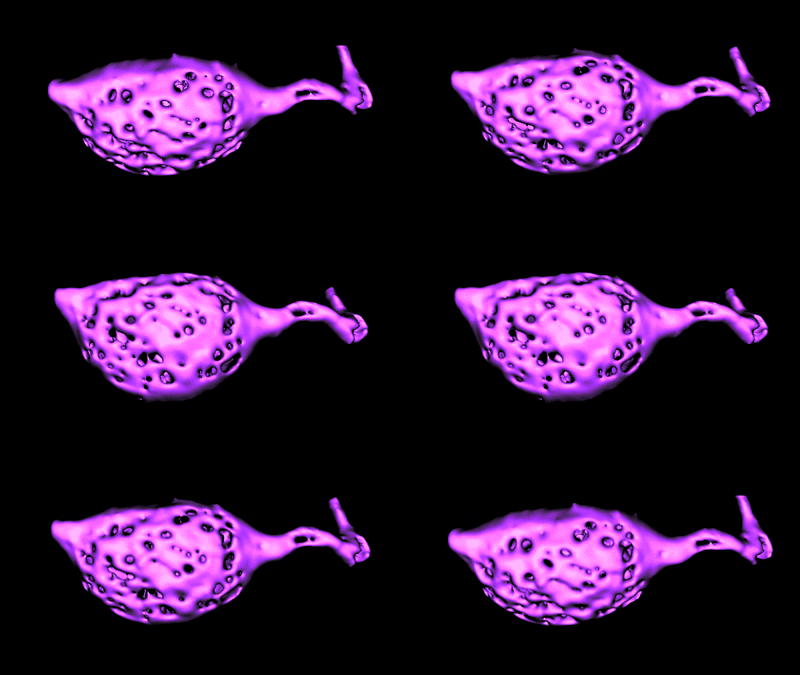
Histology
and morphometry. We use many approaches to study the cellular
anatomy of the molecules, cells and circuits we study;
immunohistochemistry, phalloidin staining for actin filaments, antibody
staining of live or fixed cells, intracellular dye injections and
morphometric analysis of the surface area of single cells or neurons
imaged in live tissue slices. We also use Diolistic labeling of single
cells and various methods for tracing axonal pathways.
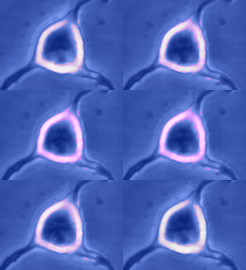
Digital
imaging. We perform many forms of imaging in live cells and
slices, including; dynamic analysis of changes in cell volume using
morphometric approaches; ion concentration imaging (e.g. Calcium) in
live cells or slices, fluorescence detection combined with
electrophysiology.
Tissue culture and molecular biology. Our experiments
also involve the use of organotypic slice cultures, cultured cell lines,
in-vitro transfection of these preparations, as well as standard
molecular biology techniques such as western blotting and RT-PCR for
detection of specific mRNA species in single cells and tissue extracts.
Electrophysiology. The Bourque Lab is first and
foremost an electrophysiology lab. Most trainees will gain experience
with many different electrophysiological techniques as required by their
particular project, including:
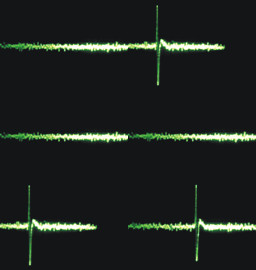
Extracellular single-unit recording. This method uses a
fine glass capillary (tip diameter 0.2-0.8 micron) filled with
electrolyte to record the action potentials fired by a neuron located
near the tip of the pipette. In most cases, the electrode is advanced
through the tissue using a remotely operated manipulator, and the cell
being recorded is not visible. An example
of
what one sees on the oscilloscope and/or computer is shown at right. The
advantage of this technique is that the neuron sampled is undamaged by
the recording process and one records the natural spontaneous electrical
activity of the cell in a relatively non-invase way. Recordings such as
these can last more than one hour.
Intracellular sharp electrode recording. This approach
makes use of a very fine-tipped (diameter 50-200 nanometer diameter)
glass micropipette inserted into the neuron, allowing direct recording
of electrical events generated by the neuron membrane. Advantages are
that both voltage (current-clamp) or current (discontinuous single
electrode voltage clamp) can be recorded.
This allows
one to measure the membrane potential, resistance, time
constant, synaptic potentials and action potentials. Current can be
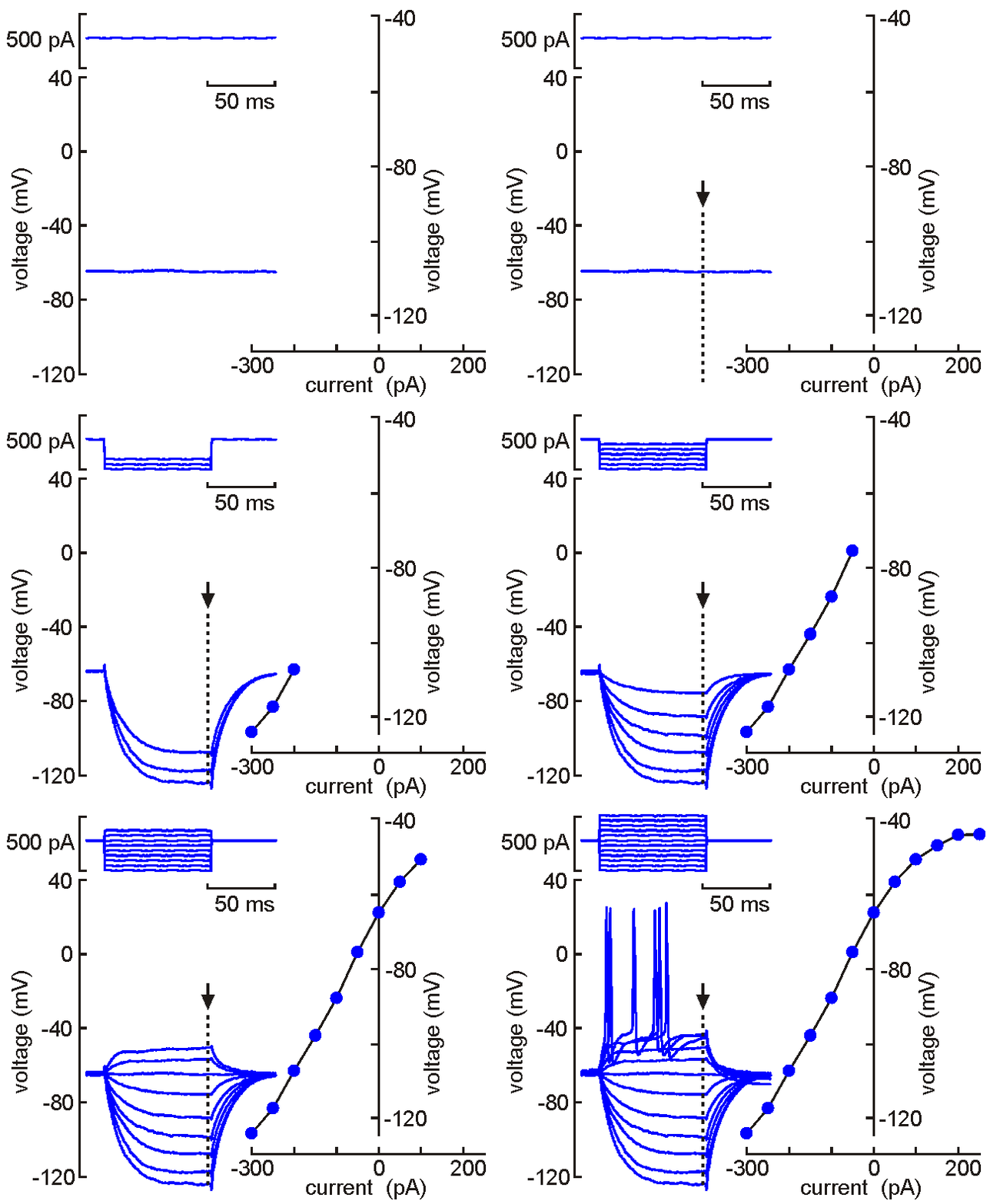
injected into the cell to change the membrane potential of the cell. In
the example shown at left, current pulses are injected into the neuron
to induce voltage changes. Note that when the neuron is depolarized
beyond a certain "threshold" action potentials are generated.
Voltage-current analysis can be performed by plotting voltage (at arrow)
as a function of current. The slope of the linear part of the curve
provides a measure of the electrical resistance of the cell. Although
this technique is relatively difficult to perform (compared with patch
clamp), sharp electrode recordings allow recordings to be obtained for
long periods without the common problems of dialysis and run-down that
affect neurons recorded by patch clamp.
Unlike many other techniques, electrophysiological experiments provide
data and information that can
be
appreciated in real time. No need to wait an hour or a day to know if
the experiment worked! The
animation
shown above illustrates a measurement of the neurons' V-I profile as
done in real time.
Evidently
protocols such as this are usually performed at a slightly slower rate,
and must be repeated
often during
an experiment. But the information they provide can be interpreted
on-line.
Patch clamp - single channel recording. Here, a larger tipped (diameter
1-2 microns) glass pipette is pressed against the membrane of a neuron
while it is observed using a microscope. Gentle suction is applied and
the high resistance seal that forms (a so-called "gigaseal") allows one
to record the activity of individual ion channel proteins as the pore
opens and closes to regulate
ther flux of ions (and thus
electrical current) across
the membrane. In the example shown at right we see several spontaneous openings of
a single channel. In one of the sweeps we see that two channels are opened
simultaneously, leading to a brief period of time when the current
recorded jumps
to total amplitude that is twice as large as that carried when a single
channel is opened (implying that there are at least two channels in the
patch!).
Patch clamp -whole cell recording.
Here, a gigaseal is formed as described for single channel recording.
Except that a brief pulse of current is used to destroy the small patch
of membrane that lies below the tip of the pipette. As a result, direct
electrical contact is made between the inside of the pipette and the
interior of the cell. This "whole cell" configuration allows high
quality current-clamp and voltage-clamp recordings to be made from
neurons. One advantage of this
technique is that drugs, dyes or
fluorescent probes (e.g. Calcium indicators) can be easily delivered to
the interior of the cell. Because this technique is most often performed
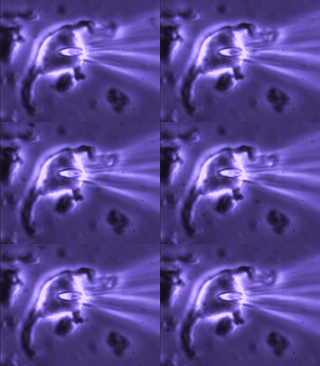
while observing the cell with a microscope, it is easy to combine
electrophysiological experiments with simultaneous imaging. In the
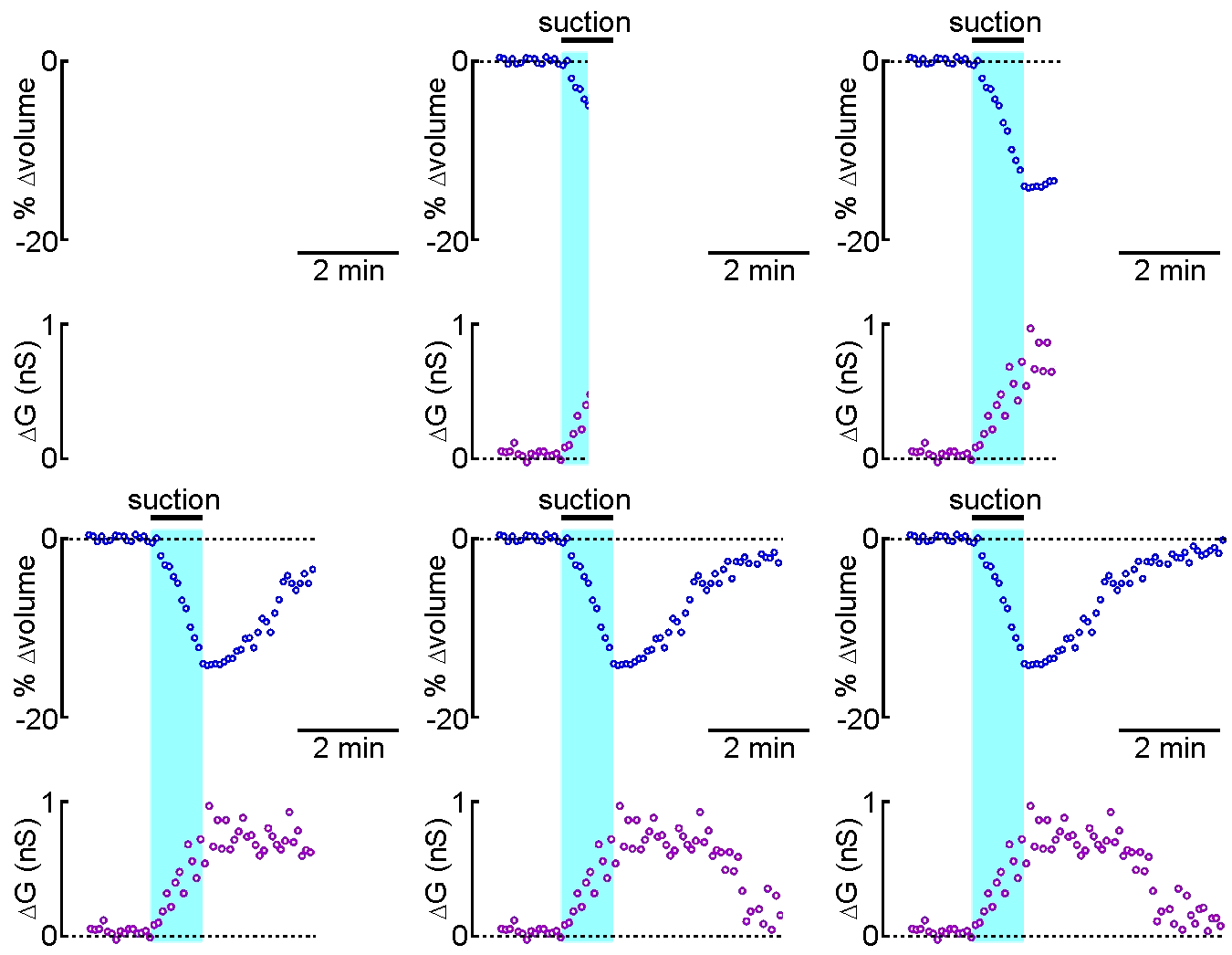
example shown at right, the volume of a supraoptic nucleus neuron was reduced by
applying suction to a recording pipette. As can be seen by the graphical
representation of an equivalent experiment, the decrease in cell volume
caused by suction is associated with an increase in the membrane
conductance (G) of the cell as measured by voltage clamp. This indicates
that cell shrinking is associated with the opening of ion channels.This
finding provides insight into one of the mechanisms underlying
osmosensory transduction in these neurons.
Fast
drug application. Whole cell recordings are used to record the
simultaneous activity of many ion channels, or fast responses involving
a subset of ion channels activated by fast drug delivery using a fast
stepper system or responses evoked by neurotreansmitter release induced
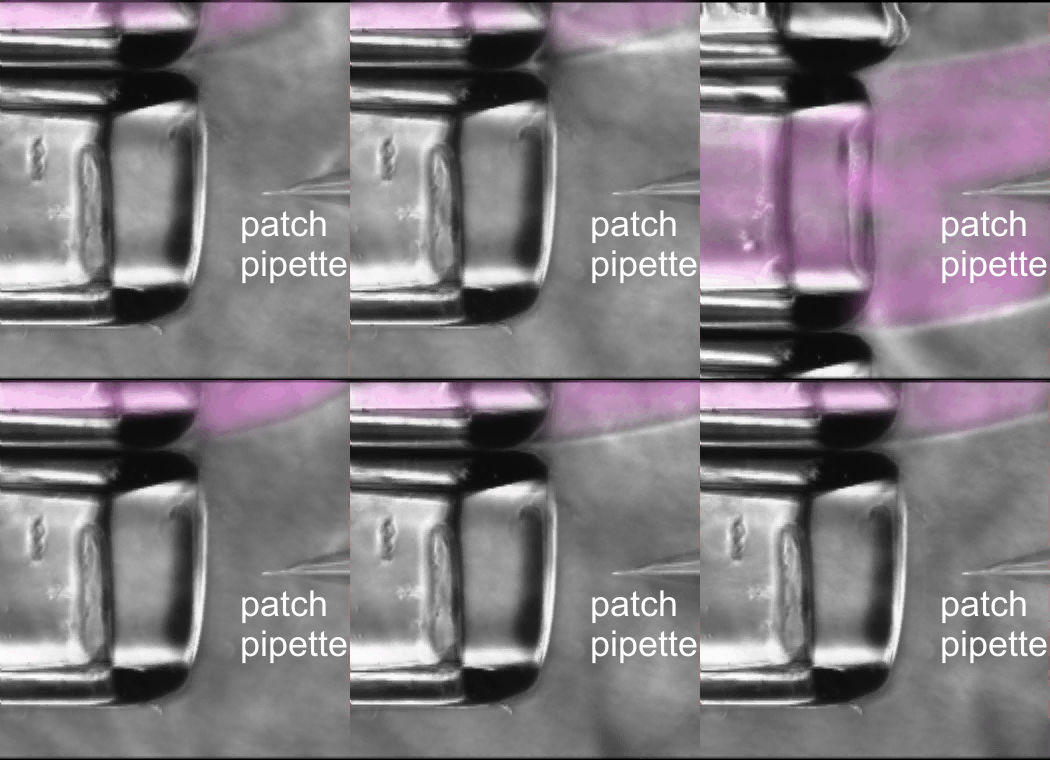
by the activation of synaptic afferents. In the movie shown at left, a
tiny neuron (not visible) at the tip of the patch pipette is being
repeatedly exposed to either control or drug-containing
solution (purple). The solutions are delivered via an assembly of
multiple square glass pipettes (3 in this case) which is rapidly moved
using a computer-controlled piezoelectric device while the response of
the neuron is being recorded.

Synaptic Responses. Our research involves analysis of
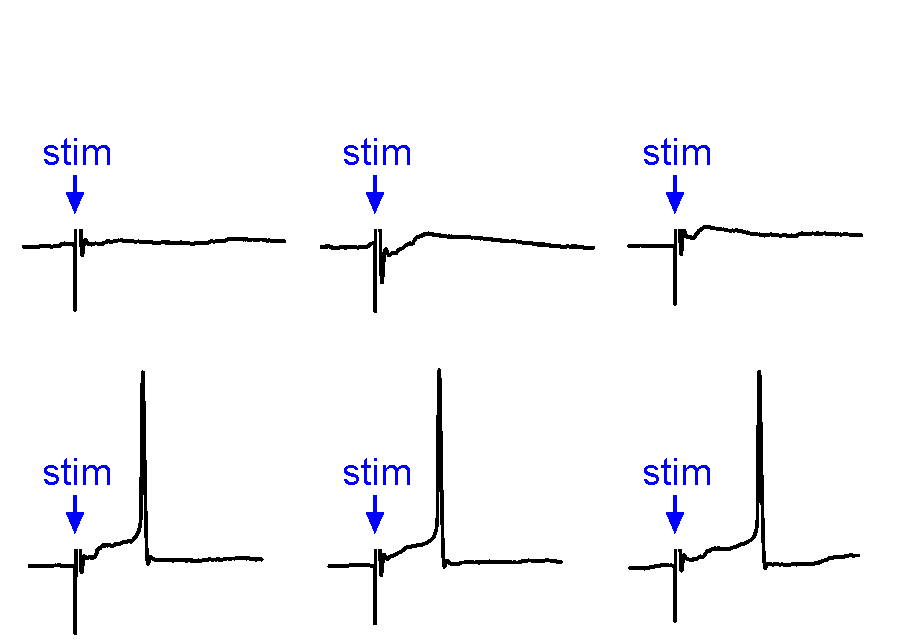
spontaneous and evoked synaptic responses. In the example shown at
right, voltage responses are recorded in current-clamp from a supraoptic
nucleus neuron while an afferent nucleus is activates by a brief (1 ms)
electrical pulse (stim). In some sweeps no response occurs, while in
others an excitatory postsynaptic potential (EPSP) is visible. In a few
sweeps the evoked EPSP generates an action potential. We also frequently
examine the effects of physiological stimulation of afferents. For
example, we examine the effects of osmotic or thermal stimulation of
central sensory neurons in one nucleus while recording changes in
synaptic activity relayed to downstream neurons. An example of this
approach is shown in the Research
page.
Cells
and tissues. Our work is performed on models that replicate
functions present in the human brain. We study acutely isolated or
cultured somata or isolated nerve terminals to define the roles of
specific types of ion channels and receptors in identified cells and
cellular compartments. Recordings in acute slices, superfused explants
or organotypic slice cultures are used to study neuron-glia
interactions, and the integration of cellular, synaptic and network
properties in-situ.